Engineering a Desktop Launchpad: The Story Behind the Rocket Thermos
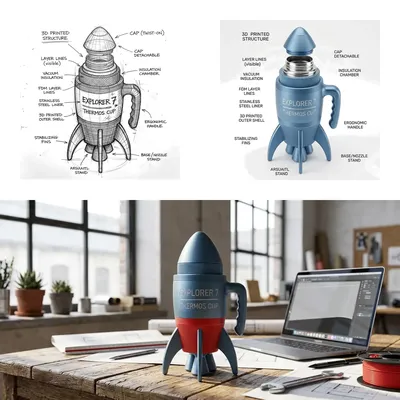
Mid-century aerospace design meets double-wall steel insulation. Here is how a retro-futuristic sketch became a functional workspace icon.
8:15 AM. Sunlight streams across your desk, illuminating a blank screen, an intense morning schedule, and a fresh batch of dark roast. Rather than settling for a chipped porcelain mug, you twist off the nosecone of a hand-polished, rocket-shaped steel vessel. Steam rises. You take a sip, dock the rocket onto its launchpad fins, and dive into deep work.
Inspiring workspaces do not happen by chance. The physical tools on your desk dictate your focus and creative rhythm. We engineered this rocket thermos around a simple premise: utilitarian gear should carry an element of tactile wonder.
From Sci-Fi Sketch to Desktop Launchpad
The initial concept grew out of a late-night drafting session fueled by 1950s retro-futuristic comics and early aerospace architecture. The goal was clear: build something substantial, precise, and uncompromisingly metallic—a piece of vintage flight hardware tailored for a modern studio desk.
Translating a 2D drawing into physical hardware requires brutal iteration. In custom product design, ergonomic guesswork kills a concept fast. We produced our first volumetric prototypes on an in-house FDM printing rig. Within hours, these rough PLA models let us test grip diameter, cap thread engagement, and total vertical scale in real space.
With the baseline proportions locked, we transitioned to high-resolution resin print iterations to refine the fin sweeping curves and evaluate ambient light reflections along the hull geometry. That speed defines modern 3D printing—you inspect weight distribution on a real desk, spot subtle design flaws, and tweak CAD files before cutting a single bar of steel on the CNC lathe.
Built for the Sunlit Workspace
Production replaces those rapid prototypes with heavy-gauge, food-grade 304 stainless steel. A double-wall vacuum core holds espresso piping hot past noon or keeps cold brew iced through late-afternoon deadlines. Condensation never drips onto your oak desktop, and your drink never stalls at room temperature.
Engineering details that drive daily performance:
- Low center of gravity: Three swept-back fins form a wide, planted base that resists accidental arm sweeps across your keyboard.
- Precision nosecone cap: Internal food-safe silicone gaskets lock thermal energy inside and eliminate leaks when stowed in a laptop bag.
- Brushed steel finish: The satin-finished hull reflects ambient light while masking fingerprint oils from daily handling.
This vessel anchors your workspace. Beyond holding coffee, it serves as a tactile focal point during deep problem-solving sessions—a constant physical reminder to favor intentional design, reject lazy shortcuts, and take pride in your craft.
FAQ
How was the rocket thermos prototyped before steel production?
Rapid desktop prototyping drove early development. We used FDM printing to evaluate physical volume and hand ergonomics, followed by high-precision resin prints to refine fin geometry and cap thread tolerances prior to CNC machining in stainless steel.
Will the fins make it wobbly or easy to tip over on my desk?
No. The three angled fins push the contact points outward, drastically lowering the overall center of gravity. The resulting footprint offers significantly greater stability than conventional cylindrical tumblers.
How long does it keep liquids hot or cold?
Built with double-wall stainless steel vacuum insulation, it maintains hot beverages at temperature for up to 12 hours and keeps cold drinks chilled for up to 24 hours.
Can I order a personalized version with custom branding?
Yes. Rooted in custom product design workflows, we offer precision laser engraving along the main steel hull for personalized initials, company branding, or team crests.
You may also like
Contact us: support@memorieslab.co
← Back to gallery