That Corn-Shaped Submarine: Why Whimsy Belongs on Your Design Desk
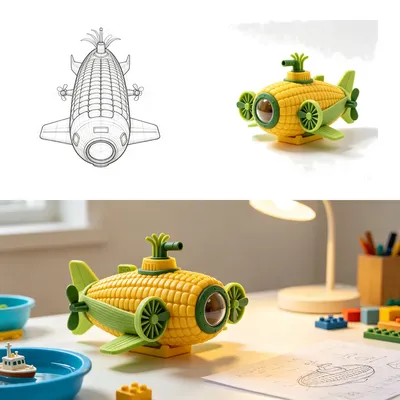
Sometimes, the oddest desk objects spark the best creative ideas.
Why a Kernel of an Idea Can Change Everything
Walk into a modern designer's studio, and you might see some interesting stuff. Not just monitors and sketchpads. Think quirky figurines, unusual desk organizers, maybe even a tiny, yellow submarine that looks suspiciously like an ear of corn. Sounds silly, right? But this isn't just clutter. It's often where the real magic happens.
That corn-shaped submarine? It’s more than just a conversation starter. It’s a little shot of unexpected joy. A reminder that design doesn't always have to be serious. Sometimes, the most functional, cutting-edge solutions come from a place of pure play. Seeing something so delightfully absurd can break through a creative block faster than any brainstorm. It pushes you to think differently. Why a corn? Why a sub? Why not?
These little moments of visual surprise keep the mind agile. They challenge assumptions. They remind us that there's always room for a little fun, even in serious work. And let's be honest, who doesn't need a chuckle when staring down a tight deadline?
From Whimsical Sketch to Tangible Desk Toy: The Making Of
So, how does something like a corn submarine go from a funny thought to a physical object sitting on your desk? It often starts with a sketch, then quickly moves into the digital realm for modeling. That's where custom product design really shines.
Once you have a 3D model, there are several ways to bring it to life. Many of these unique desk objects, especially prototypes or small runs, are made using 3D printing. It’s incredibly versatile. If you want something fairly robust and quick, FDM printing is a great choice. It builds objects layer by layer from melted plastic, perfect for getting a feel for the shape and size.
But for those super detailed, smooth finishes – like the kind you'd want for a display piece – a resin print is often the way to go. Resin printers use light to cure liquid resin, creating incredibly precise models with fine details. It gives that polished, finished look that makes a whimsical object feel truly special. Both methods allow designers to rapidly prototype, iterate, and ultimately, produce these small, inspiring pieces. It's how these little sparks of creativity become real, tangible things.
FAQ
Why would a designer want a corn-shaped submarine on their desk?
It's all about breaking routine and sparking new ideas. A quirky item like that can jolt your brain out of a rut, make you smile, and encourage playful thinking. It reminds you that good design doesn't always have to be stuffy.
Is 3D printing difficult to learn for custom designs?
Not as much as you'd think! The software has gotten a lot more user-friendly. While mastering it takes time, anyone can pick up the basics to start making their own custom objects. There are tons of online resources to get you going.
What's the difference between FDM and resin 3D printing for small objects?
<b>FDM printing</b> (Fused Deposition Modeling) uses spools of plastic filament, melting it and layering it. It’s great for durable, quick prototypes, though you might see faint layer lines. <b>Resin printing</b> (SLA/DLP) cures liquid resin with light, resulting in much finer details and smoother surfaces. For tiny, intricate models or display pieces, resin often wins out on finish quality.
You may also like
Contact us: support@memorieslab.co
← Back to gallery