The Pear-Shaped Acoustic: Rethinking Guitar Geometry for the Creative Studio
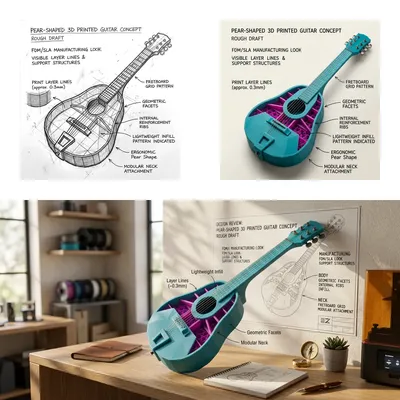
Inside the design process of a custom timber acoustic that combines modern rapid prototyping with traditional luthiery to reshape studio workflows.
A Break from the Traditional Dreadnought
Step into almost any recording room and the visual pattern repeats: dark wall brackets, three identical dreadnought bodies, and a console buried under XLR runs. Traditional acoustic geometries deliver classic tone, but visually, luthiery has recycled the same silhouettes for nearly a century.
I wanted an instrument that commands attention as a sculptural piece before a single microphone goes live. The initial impulse drew from Renaissance lutes and the organic profile of winter pears resting on a ceramic tray. The core question was simple: could a steel-string acoustic adopt these sweeping lower bouts while preserving the projection and clarity of a premium hardwood build?
From Digital Prototyping to Warm Timber
Engineering balanced acoustics inside an asymmetric, pear-shaped soundbox presented an immediate fabrication challenge. Standard bending jigs fail on non-standard curves. To solve this, the workflow shifted toward modern digital tools. During the initial custom product design stage, 3D printing helped map internal air volume and evaluate how the body contours met the player's torso.
Before touching a single block of spruce or dark walnut, a full-scale FDM printing mockup verified weight distribution on a shoulder strap. For intricate elements like bridge pin blocks and rosette templates, high-resolution resin print components formed accurate master molds for hardware casting. This eliminated weeks of trial and error while keeping hand-carved timber at the center of the build.
A Visual Muse in Golden Hour Light
Place this guitar on an oak stand near a south-facing window and the mood of the room transforms immediately. Late afternoon light catches the flared lower bout, highlighting the deep, honeyed grain of the hand-rubbed oil finish. It invites immediate contact.
This unconventional body geometry solves specific creative and acoustic demands in a studio environment:
- Focused Midrange: The tapered upper bout combined with a wide lower body concentrates acoustic energy, producing a clean midrange that sits neatly under a vocal track.
- Sculptural Presence: The organic lines break up the utilitarian look of rack gear and monitors, grounding the workspace with natural wood grain.
- Ergonomic Lap Rest: The offset waist drops the body lower on the thigh, reducing shoulder fatigue during extended tracking sessions.
An instrument left on display as a functional sculpture gets played. It avoids the friction of remaining latched inside a hardshell case beneath a couch, staying accessible whenever a quick idea strikes.
FAQ
Why choose a pear-shaped acoustic over a traditional dreadnought for studio songwriting?
The asymmetric geometry serves a direct acoustic purpose. The tapered upper chamber restricts boomy low-end resonance while the widened lower bout drives a tight, present midrange that tracks cleanly without aggressive EQ correction. Visually, it stays out on display rather than stored away in a case.
How was 3D printing used alongside traditional woodworking?
FDM printing produced full-scale physical prototypes to test ergonomics and strap balance before processing raw lumber. Stereolithography resin prints then created detailed master molds for custom bridge hardware and rosette inserts, combining digital tolerance control with hand-finished tonewoods.
What woods give this instrument its tone and appearance?
The soundboard uses solid Sitka spruce to deliver fast transient response and clear acoustic projection. American walnut forms the back and sides, supplying warm sustain alongside dark, variegated grain patterns that react vividly to ambient light.
Can this custom product design be modified for different body sizes or left-handed players?
Yes. CAD-driven digital models allow fast adjustments to body scale, neck profile, and soundhole placement before cutting timber, making custom ergonomic or left-handed layouts straightforward to execute.
You may also like
Contact us: support@memorieslab.co
← Back to gallery